
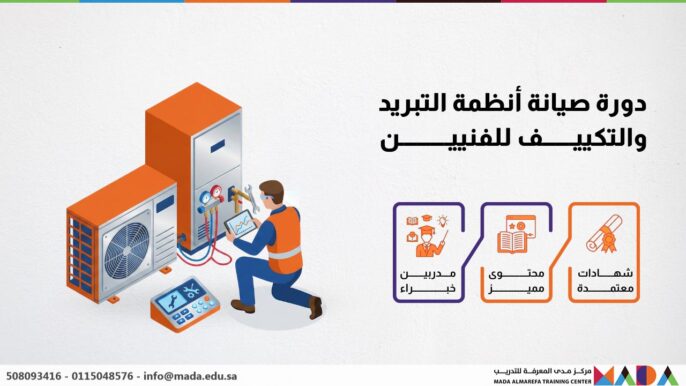
The HVAC Maintenance Course for Technicians is a specialized training program tailored to meet the labor market demands in the field of ventilation and air conditioning systems. This course provides participants with a comprehensive understanding of both basic and advanced maintenance concepts for cooling systems, with a strong focus on modern theoretical applications. With its professional design and adherence to the latest technical standards, this course serves as a foundational step toward enhancing technicians’ skills and improving their proficiency in handling various HVAC systems. Engineers are encouraged to refer to the HVAC Design Course for Engineers for more in-depth design content.
Target Audience
The HVAC Maintenance Course for Technicians is designed for:
- Technicians working in mechanical or electrical maintenance
- Employees in contracting and HVAC companies
- Maintenance supervisors in industrial and commercial facilities
- Graduates of technical and vocational institutes seeking skill development
- Individuals interested in learning the theoretical fundamentals of HVAC maintenance
Course Modules
This five-day course covers the following modules:
Day One: Introduction to Cooling and Air Conditioning Systems
- Definition of cooling and air conditioning and the types of systems used
- Basic physical principles of cooling operations
- Vapor-compression and evaporative cooling cycles
- Key system components: compressor, condenser, evaporator, and expansion valve
Day Two: Study of System Components and Their Functions
- Types of compressors and how to choose the appropriate one based on application
- Function and types of condensers (air-cooled and water-cooled)
- Operating principle of the evaporator and its impact on system efficiency
- Roles and environmental impact of refrigerants
Day Three: Preventive and Corrective Maintenance of HVAC Systems
- Concept of preventive maintenance and its importance in prolonging system lifespan
- Theoretical steps for inspecting systems and identifying faults
- Developing periodic maintenance schedules
- Handling issues such as weak cooling or system shutdowns
Day Four: Technical Reading of Electrical Diagrams and Fault Diagnosis
- Understanding HVAC electrical symbols and schematics
- Analyzing electrical circuits and component functions
- Diagnosing faults through schematic analysis
- Identifying basic electrical protection systems
Day Five: Measurement Tools and Theoretical Diagnostic Techniques
- Introduction to maintenance tools (manometer, multimeter, thermometer)
- Using measurement tools to collect system performance data
- Interpreting and analyzing readings to assess operational efficiency
- Reviewing model cases and theoretical solutions to common faults
Course Objectives
This course aims to enable participants to:
- Understand the basic principles and components of HVAC systems
- Apply preventive and corrective maintenance methods systematically
- Read and analyze HVAC electrical diagrams
- Diagnose common faults and suggest appropriate solutions
- Use measurement tools to monitor and analyze system performance
- Learn about the latest theoretical techniques in HVAC maintenance
Course Impact
On the Trainee
This course enhances your technical capabilities in understanding and diagnosing HVAC systems, providing the theoretical knowledge required to apply effective maintenance across various work environments.
On the Institution
The course helps improve operational efficiency, reduce system downtime, and increase reliability, leading to lower maintenance costs and improved quality of service delivery.
The HVAC Maintenance Course for Technicians is essential for any technician aiming to advance their skills in the field of cooling and air conditioning. Through this program, you will acquire practical and theoretical knowledge that enhances your professional competence and expands your career opportunities in the growing labor market.

