
Course Overview
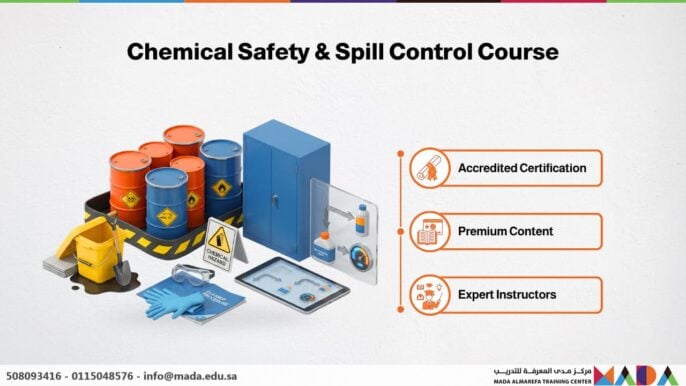
This course equips you with the fundamental knowledge of chemical safety in the workplace and how to effectively manage chemical spill incidents. You will learn how to read and interpret Material Safety Data Sheets (MSDS/SDS) and handle common chemicals utilized in agricultural industries, such as industrial disinfectants, detergents, and pesticides. Furthermore, the course provides practical tools for implementing safety procedures during storage and transportation, alongside developing proactive response plans that minimize risks and protect both personnel and property.
Target Audience
This course is specifically designed for the following professionals:
- Occupational safety supervisors and experts in agricultural and industrial facilities.
- Engineers and technicians involved in production and chemical storage.
- Emergency response and hazardous materials (HAZMAT) teams.
- Quality and environmental compliance officers in agro-industrial institutions.
- Students and researchers in the fields of chemical and agricultural engineering.
Course Curriculum
The course modules are comprehensively distributed over two intensive days:
Day 1: Fundamentals of Chemical Safety and Reading Data Sheets
- The core concept of chemical safety and its critical importance in protecting workers and organizational assets.
- Types and classifications of chemicals commonly used in the agricultural work environment.
- Overview of common chemical incidents and their root causes.
- Defining Material Safety Data Sheets (MSDS/SDS) and their vital role in risk management.
- Detailed breakdown of SDS sections, including Product Identification, Hazard Identification, First Aid Measures, Firefighting Measures, and Handling/Storage.
- How to utilize data sheets to determine appropriate preventive and engineering controls.
Day 2: Safe Handling Procedures and Spill Control
- Principles of safe chemical storage, including the segregation of reactive materials and environmental/temperature control.
- Protocols for the safe internal transportation of hazardous materials within the facility.
- Selecting and utilizing the appropriate Personal Protective Equipment (PPE) specific to each chemical hazard.
- Identifying types of chemical spills (minor, major, and highly hazardous) and the immediate steps for rapid response.
- Choosing the correct materials and equipment for effective spill containment and cleanup operations.
- Hypothetical Case Study: Managing a chemical spill incident on a production line or within a storage warehouse.
Learning Objectives
By the end of this educational course, you will be empowered to:
- Identify common chemical hazards present in agricultural and industrial work environments.
- Understand how to accurately read and interpret Material Safety Data Sheets (MSDS/SDS).
- Apply rigorous safety procedures during the storage, transportation, and usage of chemicals.
- Develop and execute highly effective response plans for chemical spill emergencies.
Course Impact
On the Trainee
- Elevating your awareness and technical competence in handling chemicals safely.
- Developing your analytical skills in reading and utilizing safety data sheets effectively.
- Enhancing your overall readiness for rapid and safe response to spill incidents.
On the Organization
- Significantly reducing risks and liabilities resulting from the mishandling of chemicals.
- Improving the operational response times of work teams during spill emergencies.
- Strengthening organizational compliance with international safety and environmental protection standards.
Conclusion
The Chemical Safety & Spill Control course is an essential pillar in any work environment that handles hazardous materials. It provides you with the necessary knowledge and practical skills to prevent hazards and develop highly effective responses to unexpected emergencies. Your investment in this course is a direct investment in your safety, the safety of your colleagues, and the integrity of your organization, contributing to the establishment of a safer, more sustainable work environment.

