
Course Overview
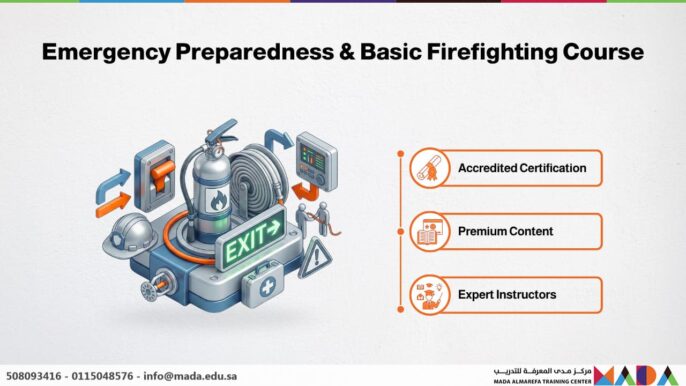
The Emergency Preparedness & Basic Firefighting course provides essential theoretical knowledge on how to prepare for emergencies and manage fire incidents within the workplace, with a specialized focus on agricultural factory environments. Participants will learn the critical importance of pre-planning and organized emergency response, as well as how to identify various fire classes and appropriate suppression methods. This course empowers you to develop effective evacuation plans and distribute roles within emergency response teams to ensure personnel safety and property protection.
Target Audience
This course is designed for the following groups:
- Occupational safety supervisors and experts in agricultural factories.
- Operations and production managers.
- Engineers and technicians working in cold storage, warehouses, and production lines.
- Quality and inspection officers.
- Emergency Response Teams (ERT) in agricultural and industrial institutions.
Course Curriculum
The curriculum is structured over two intensive days as follows:
Day 1: Fundamentals of Emergency Preparedness and Fire Classes
- Explaining the concept and types of emergencies relative to common risks in agricultural plants.
- The vital role of pre-preparedness in saving lives and minimizing material losses.
- Identifying the core elements of an effective emergency plan.
- International fire classification (Classes A, B, C, D, and K) and the characteristics of each.
- Ignition sources in agricultural factories, including electrical equipment, oils, and flammable materials.
- Risks associated with bulk material storage.
Day 2: Firefighting Equipment and Evacuation Planning
- Overview of fire suppression equipment: extinguishers, automatic sprinkler systems, and early warning systems.
- Selecting the appropriate firefighting equipment based on the fire class.
- Safe evacuation procedures for personnel during emergencies.
- Organizing assembly points and ensuring comprehensive personnel accountability.
- Drafting emergency plans and assigning roles to Emergency Response Teams (ERT).
- Case Study: Analyzing a fire scenario in a raw material warehouse or production line and evaluating the response actions.
Learning Objectives
By the end of this course, participants will be able to:
- Understand the principles of emergency preparedness and their workplace application.
- Identify various fire types and their specific characteristics.
- Develop evacuation plans tailored to the agricultural factory environment.
- Enhance awareness of the roles and responsibilities of emergency teams.
- Raise the level of institutional readiness for crisis management.
Course Impact
On the Trainee
- Development of technical skills in understanding emergency plans and fire management.
- Increased proficiency in selecting the correct fire suppression tools.
- Improved capability to participate effectively within an Emergency Response Team.
On the Organization
- Reduction of potential risks arising from fire incidents.
- Strengthening the general safety standards within the work environment.
- Improving the organization’s emergency response time and minimizing human and material losses.
Conclusion
This course represents a practical opportunity to acquire the fundamental knowledge and skills in emergency preparedness and firefighting, particularly within the unique risk landscape of agricultural factories. Your participation in this course will make you better prepared to protect yourself, your colleagues, and your organization from potential hazards. Register today to contribute to a safer work environment.

