
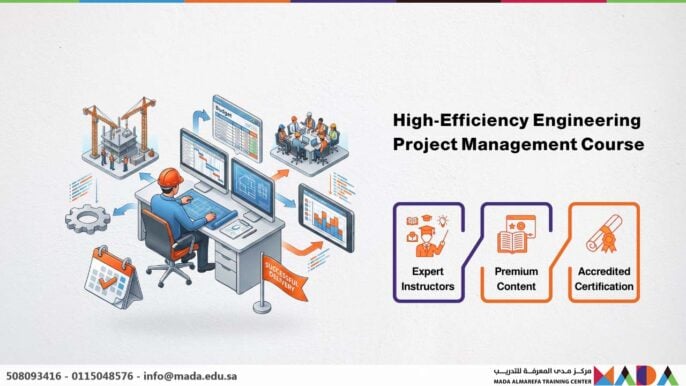
Course Overview
The High-Efficiency Engineering Project Management course is a premium opportunity for engineers and administrators seeking to advance their project management skills with effectiveness and professionalism. This course focuses on the latest methodologies and foundations required by both local and international markets. It aims to enhance professional efficiency, reduce waste, and ensure that project goals are achieved within the specified schedule and budget. By learning from industry experts, participants will ensure high-quality training that bridges the gap between theoretical concepts and workplace reality.
Course Objectives
- Understand the concepts and fundamentals of modern engineering project management.
- Acquire the necessary skills to define requirements and organize resources efficiently.
- Learn how to develop comprehensive timelines and manage project-related risks.
- Master tools for evaluating project performance and tracking progress with precision.
- Develop effective communication skills for engaging with teams and stakeholders.
- Familiarize participants with global project management methodologies such as PMBOK and PRINCE2.
- Build the capacity to make strategic decisions during various project phases.
Course Outline
Day 1: Introduction to Engineering Project Management
- The concept of engineering projects and their core characteristics.
- The role of the Project Manager (PM) and the primary challenges they face.
- The stages of the Engineering Project Lifecycle.
- The importance of project management in achieving organizational objectives.
Day 2: Strategic Project Planning
- Defining project objectives and stakeholder requirements.
- Decomposing work into manageable tasks using the Work Breakdown Structure (WBS).
- Setting preliminary budgets and estimating required resources.
- Designing project timelines using tools like Gantt Charts.
Day 3: Project Execution and Organization
- Team formation and defining member roles and responsibilities.
- Efficient management of human and material resources.
- Coordinating between different entities and managing change control.
- The concept of Project Governance and the use of documentation templates.
Day 4: Performance Monitoring and Risk Management
- Utilizing Key Performance Indicators (KPIs) to track progress.
- Monitoring tools and periodic project reporting.
- Identifying and analyzing potential risks (Risk Analysis).
- Strategies for risk response and impact mitigation.
[Image of a Project Risk Matrix]
Day 5: Project Closing and Final Evaluation
- Successful steps for project termination and results delivery.
- Conducting “Lessons Learned” sessions and documenting expertise.
- Evaluating team performance and project outcomes against initial goals.
- The concept of Benchmarking for improving future performance.

