
About the Course
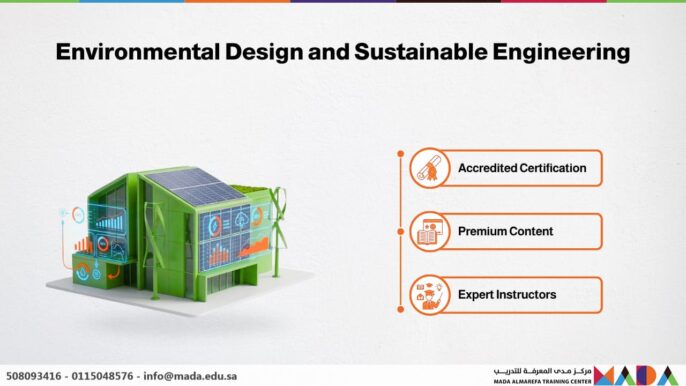
The “Environmental Design and Sustainable Engineering” course is a pivotal step toward mastering green building concepts and achieving a harmonious balance between urban development and environmental preservation. As the global demand for sustainable solutions in engineering and architecture reaches unprecedented levels in 2026, acquiring these modern skills is no longer an option—it is a necessity to remain competitive in both local and international labor markets.
Course Objectives
- Understand the core concepts of environmental design and the foundational principles of sustainable engineering.
- Acquire the technical skills to design urban projects with high energy efficiency and low environmental impact.
- Learn how to conduct Environmental Impact Assessments (EIA) for engineering projects.
- Master the use of modern technologies to reduce the carbon footprint of buildings, aiming for Net-Zero targets.
- Gain proficiency in analyzing the economic and environmental feasibility of green projects.
- Familiarize yourself with global environmental rating systems, including LEED and BREEAM.
- Develop a forward-looking vision on the future of sustainable engineering and its role in global development goals.
Course Syllabus
Day 1: Introduction to Environmental Design and Sustainable Engineering
- The concept of environmental design and its historical evolution.
- Core principles and strategic goals of sustainable engineering.
- The intersection of environmental design and the 2026 job market demands.
- Climate change challenges and their direct impact on project design and resilience.
Day 2: Environmental Design Strategies in Architecture
Focusing on Passive Design techniques to reduce reliance on mechanical heating and cooling.
- Designing high-performance, energy-efficient buildings.
- Utilizing local and recycled materials to promote sustainable construction.
- Integrating micro-climatic conditions into architectural planning.
- Global Case Studies: Successful models of environmental design excellence.
Day 3: Environmental Performance Rating and Assessment Systems
- In-depth review of LEED and BREEAM assessment criteria.
- The concept of “Green Zones” in sustainable urban planning.
- Advanced techniques for water conservation and energy reduction in smart buildings.
- Mechanisms for calculating the carbon footprint ($CO_2e$) of engineering projects.
Day 4: Energy and Resource Management in Sustainable Projects
- Energy-saving technologies for residential and commercial developments.
- Integrating renewable energy sources (Solar, Wind, Geothermal) into environmental design.
- Waste management and recycling protocols during construction phases.
- Implementing the Circular Economy model within the construction sector.
[Image of the circular economy in the construction industry]
Day 5: Future Trends and Challenges in Sustainable Engineering
- The future of environmental design amidst global technological shifts.
- Navigating regulatory, legislative, and economic challenges in green project execution.
- The role of government policies and public-sector initiatives in supporting sustainability.
- Career Path: How to launch and grow your professional career in environmental design.

