
General Overview
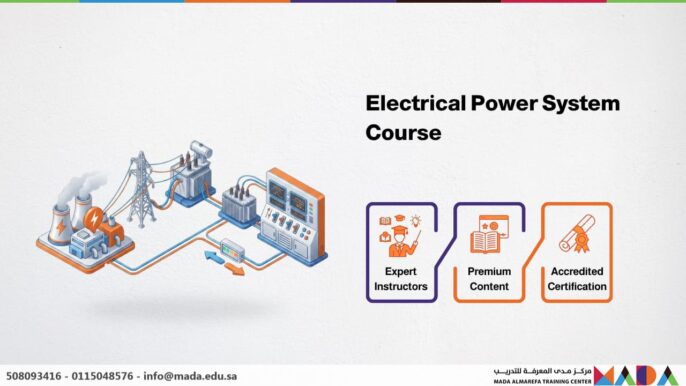
The Electrical Power System Course is a specialized training program designed to build a solid theoretical foundation in the components and functions of power generation and distribution systems within industrial and urban environments. This course provides comprehensive knowledge of the fundamental infrastructure of electrical grids—starting from generation sources, through substations, to distribution networks—focusing on conceptual understanding without the need for practical field exercises.
The curriculum covers essential concepts such as Alternating Current (AC), voltage, and power, alongside in-depth explanations of system stability, power flow, and protection mechanisms. The content is delivered in a systematic and clear manner, enabling trainees to understand the mechanics of electrical grids, the nature of the challenges they face, and how to address them from a theoretical perspective. This course is ideal for engineers, technicians, and administrators in the energy sector, as well as anyone seeking to develop their knowledge in this vital field.
General Objective
The program aims to empower trainees with a precise theoretical understanding of the general framework of electrical power systems in terms of design, operation, and protection. It seeks to consolidate knowledge of the physical and engineering principles upon which electrical grids are built, emphasizing the balance between generation and consumption, types of networks (connected and isolated), and the role of transformers and substations.
The objective focuses on developing the trainees’ ability to understand operational challenges such as power outages, overloads, and instability, and the role of preventive systems in mitigating them. It also introduces participants to the integration of traditional and renewable energy sources within the grid and provides an understanding of the modern shift toward Smart Grids. This program is a significant step toward building a comprehensive technical awareness of how power systems function.
Detailed Objectives
- Understand the concept of the Electrical Power System and its importance in modern infrastructure.
- Identify the primary components of the system: Generation, Transmission, Distribution, and Protection.
- Comprehend concepts of voltage, current, and power within three-phase circuits.
- Learn how power flows through the grid and the factors affecting it.
- Gain theoretical knowledge of protection systems and their role in ensuring system stability.
Course Curriculum
Day 1: Introduction to Electrical Power Systems
- Definition of the Electrical Power System course.
- General overview of system components: Generation, Transmission, and Distribution.
- The difference between Direct Current (DC) and Alternating Current (AC) systems.
- The significance of AC in modern power grids.
Day 2: Power Generation Sources
- Explaining traditional generation sources (Gas, Coal, Oil).
- Theoretical overview of renewable energy sources (Solar, Wind, Hydro).
- The concept of power plants and their classification by size and function.
- How to balance power generation with demand.
Day 3: Power Transmission and Distribution
- The concept of High-Voltage (HV) power transmission and its benefits.
- The role of transformers in stepping voltage up and down.
- The structure of distribution networks in urban and industrial areas.
- Overview of challenges in long-distance power transmission.
Day 4: System Protection and Stability
- The concept and importance of electrical system protection.
- Explaining types of protection devices (Circuit Breakers, Relays).
- Concepts of dynamic and thermal stability within the system.
- Theoretically addressing faults and power outages.
Day 5: Modern Transitions in Power Systems
- The concept of the Smart Grid and its key characteristics.
- The role of Advanced Metering Infrastructure (AMI) in energy management.
- Overview of energy storage systems and their integration into the grid.
- The future of electrical power in light of environmental and digital trends.
Conclusion
The Electrical Power System Course is a vital educational tool for anyone working in the energy sector, electrical engineering, or infrastructure management. It contributes to building a strategic and technical awareness of how electrical grids operate, ensure stability, and keep pace with modern technological shifts. This knowledge is indispensable for electrical engineers, network planners, operations supervisors, and technical managers in utility and industrial companies.
By providing a structured theoretical approach, this course enables trainees to navigate the technical complexities of power systems and make informed decisions that enhance grid efficiency and security. It is a proactive step toward qualifying professional cadres capable of contributing to the development of the energy sector in a professional and sustainable manner.

