
About the Course
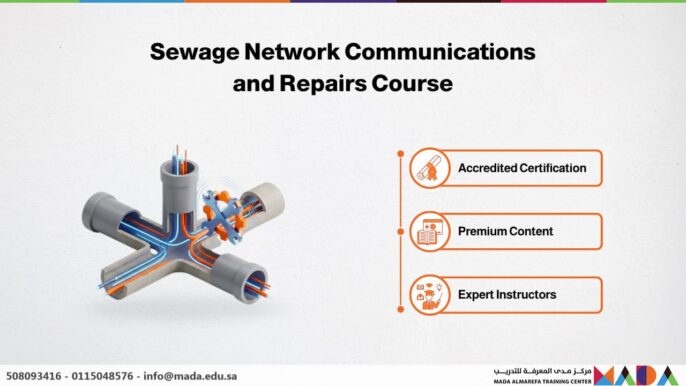
The “Sewage Network Communications and Repairs” course offers a unique opportunity to master essential skills in the management and maintenance of wastewater systems. As one of the most sought-after programs in the infrastructure sector, this course prepares qualified personnel to tackle the daily challenges of network operations. It is specifically designed to meet the labor market’s demand for specialists who can integrate modern communication technologies with robust repair strategies in this vital field.
Course Objectives
-
- Understand the core concepts of sewage systems and their integrated communication networks.
- Acquire the technical skills necessary for fault detection and effective repair execution.
- Identify specialized tools and machinery used in modern network operation and maintenance.
- Master professional communication protocols between technical teams during repair cycles.
- Develop analytical skills to diagnose problems and implement solutions through non-intrusive methods.
- Enhance operational efficiency while strictly adhering to safety standards during repair works.
- Leverage modern software and digital tools to monitor and track network performance.
Course Syllabus
Day 1: Introduction to Sewage Systems and Infrastructure
- Core concepts of sewage networks and their vital role in urban environments.
- Classification of wastewater networks and their functional types.
- The critical role of telemetry and communications in efficient network operations.
- Global challenges facing modern sewage infrastructure management.
Day 2: Internal Communications within Sewage Networks
- The importance of streamlined communication between administrative and field technical teams.
- Emergency communication systems and rapid response protocols.
- The role of technology (IoT and SCADA) in enhancing stakeholder connectivity.
- Coordination strategies for cross-departmental integration in large-scale projects.
Day 3: Fault Diagnostics and Problem Analysis
- Methodologies for diagnosing network failures using available field data.
- Utilizing data analysis tools to identify root causes of structural and hydraulic faults.
- Critical decision-making frameworks for addressing technical failures.
- Practical case studies analyzing the most common network breakdowns.
Day 4: Repair Techniques and Preventive Maintenance
- Understanding Preventive vs. Corrective (Emergency) maintenance strategies.
- Standard procedures for Trenchless Repairs and non-intrusive interventions.
- Implementing digital solutions to track and document the repair process.
- Periodic condition assessment and prioritizing repair workflows based on risk.
Day 5: Modern Applications and Remote Operations Management
- Reviewing cutting-edge technologies in smart sewage network management.
- Remote monitoring tools and their impact on operational performance.
- The future of wastewater management: AI and automation trends.
- Comprehensive course review and the development of a professional action plan for participants.

