
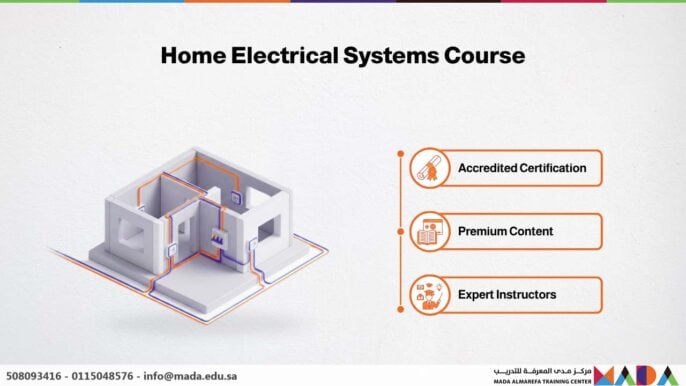
Course Overview:
The “Home Electrical Systems” course is a comprehensive, specialized program that provides participants with extensive knowledge on the design, installation, and distribution of electrical systems in residential environments. This course is carefully designed to meet the growing labor market demand for qualified technicians who are capable of effectively understanding and analyzing electrical systems. By undertaking the Home Electrical Systems course, trainees will acquire the fundamental theoretical skills necessary to excel in the field of residential electrical installation and maintenance.
Course Objectives
- Understand the fundamental principles of home electrical systems.
- Identify the various types of electrical circuits utilized in residential properties.
- Learn how to select and calculate the appropriate electrical loads for each room.
- Study the standard specifications and mandatory safety procedures when handling electrical wiring.
- Master the theoretical steps required to design a domestic distribution board safely and efficiently.
- Learn the methods for calculating electrical energy consumption within residential units.
- Develop the ability to theoretically analyze and troubleshoot common problems in home electrical systems.
Course Curriculum
Day 1: Fundamentals of Home Electricity
- Introduction to basic electrical concepts (Voltage, Amperage, Wattage).
- Types of materials and components used in residential electrical installations.
- Explaining the difference between Alternating Current (AC) and Direct Current (DC).
- Core principles of health and safety when handling electrical systems.
Day 2: Designing and Determining Electrical Loads
- Calculating the specific electrical loads for each room in the house.
- Determining the appropriate switch capacities and safe loads for each circuit.
- Dividing and effectively distributing electrical circuits throughout the home.
- Utilizing standard calculation tables in residential electrical design.
Day 3: Types of Residential Electrical Circuits
- Identifying service circuits, lighting circuits, and power outlets (receptacles).
- Explaining the operation, purpose, and function of each circuit type.
- Distributing electrical loads across circuits in a perfectly balanced manner.
- Understanding the critical relationship between wire sizing and circuit breakers.
Day 4: Designing the Home Distribution Board
- Identifying the components of main and sub-distribution boards (electrical panels).
- Step-by-step guide to drawing an electrical wiring map/blueprint for a house.
- Selecting the appropriate Miniature Circuit Breakers (MCB) for each specific circuit.
- Explaining the earthing (grounding) system and its vital importance in home safety.
Day 5: Analyzing Electrical Energy Consumption
- Methods and tools for measuring energy consumption in the home.
- Analyzing residential electricity bills based on actual appliance usage.
- Estimating the operational costs and power draw of various household appliances.
- Theoretical identification of the most prominent home electrical problems and how to analyze them.

