
Course Overview
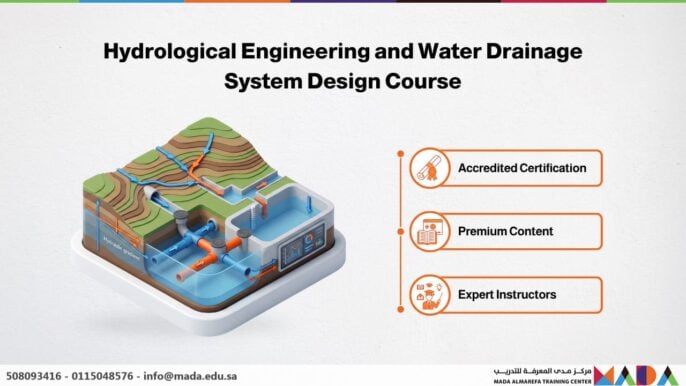
The Hydrological Engineering and Water Drainage System Design course is a specialized training program offered by the Mada Al-Ma’rifah Training Center. It is designed to empower engineers and practitioners with a deep understanding of water flow mechanisms and their application in designing highly efficient drainage systems. As the demand for sustainable water solutions grows, this course directly addresses the needs of the Saudi labor market, particularly within the infrastructure and environmental engineering sectors.
Course Objectives
- Understand the fundamental concepts of hydrological engineering and their practical applications.
- Analyze climatic and hydraulic data essential for designing effective drainage systems.
- Master the use of modern tools and software for drainage system modeling.
- Design water drainage systems tailored for residential projects and large-scale infrastructure.
- Evaluate hydrological risks, such as flooding, and develop comprehensive risk management plans.
- Apply sustainability standards to the design of drainage networks.
- Enhance proficiency in preparing technical studies and professional reports for water projects.
Course Curriculum
Day 1: Introduction to Hydrological Engineering
- Core concepts of hydrological engineering and its vital role in civil projects.
- The hydrological cycle and its primary components.
- Exploring the rainfall-runoff relationship.
- Practical Case Study: Analysis of local rainfall data.
[Image of the hydrological cycle]
Day 2: Field Data Collection and Analysis
- Techniques for gathering climatic and hydraulic data.
- Utilizing Geographic Information Systems (GIS) to analyze flood-prone areas.
- Calculating surface runoff rates using standard hydrological equations.
- Extracting hydrological characteristics from digital maps and actual field data.
Day 3: Design of Surface Drainage and Sewerage Systems
- Classification of drainage systems and specific design requirements.
- Determining pipe sizes and channel cross-sections.
- Selecting drainage materials suited to local environmental conditions.
- Analyzing executive blueprints for real-world drainage sites.
Day 4: Computer Modeling for Drainage Systems
- Introduction to industry-standard software: HEC-HMS and SWMM.
- Building a digital model of a drainage network.
- Simulating various rainfall events and intensities.
- Interpreting results to optimize design efficiency.
Day 5: Risk Management and Sustainability in Drainage
- Assessing hydrological risks and their impact on urban infrastructure.
- Strategies for flood prevention and mitigation of water loss.
- Designing eco-friendly, sustainable drainage systems.
- Practical demonstration: Implementing a digital drainage model and analyzing its performance.

