
About the Course
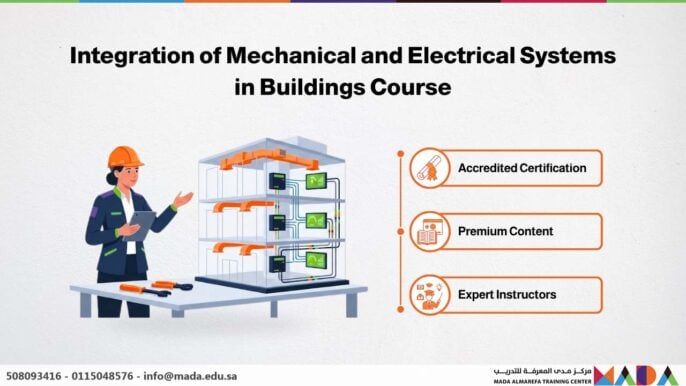
The Integration of Mechanical and Electrical (M&E) Systems in Buildings course is a premier opportunity for engineers, technicians, and decision-makers in the construction sector to master the latest methodologies for connecting and synchronizing core building infrastructures.
In the modern construction landscape, learning the integration of M&E systems has become an essential requirement to keep pace with evolving labor market demands. This course focuses on achieving high operational efficiency while maintaining the highest standards of quality, safety, and sustainability in modern facilities.
Course Objectives
- Understand the core concepts of M&E system integration and its direct impact on overall project performance.
- Learn to design integrated systems that ensure energy efficiency and safe operations.
- Identify common challenges encountered during the cross-disciplinary integration process.
- Apply best practices in project management for projects requiring high-level technical integration.
- Analyze real-world successful case studies of smart projects that utilize integrated mechanical and electrical frameworks.
- Prepare accurate technical specifications for intelligent and integrated building systems.
- Improve communication between different engineering disciplines to ensure the effective execution of building systems.
Course Curriculum
Day 1: Introduction to Building System Integration
- Foundational concepts of integration between mechanical and electrical systems.
- The role of integration in enhancing overall building performance and longevity.
- Technical and regulatory challenges in the integration process.
- Criteria for selecting compatible systems for large-scale projects.
Day 2: Primary Mechanical Systems in Buildings
- Overview of essential mechanical systems (Cooling, Heating, and Ventilation).
- The relationship between mechanical design and integration requirements.
- The impact of energy efficiency standards on mechanical system design.
- Analyzing operational requirements for integrated HVAC systems.
Day 3: Electrical Systems and Auxiliary Infrastructures
- Defining the core elements of building electrical systems.
- Analyzing how electrical systems influence the performance of other building utilities.
- Integrated design for power distribution and lighting networks.
- Utilizing smart control systems within electrical infrastructures.
Day 4: Integration Methodologies and Techniques
- Integrated Design Processes (IDP) and cross-system methodologies.
- Software tools used in planning and simulating system integration.
- The role of Building Information Modeling (BIM) in M&E integration.
- Studying system interactions and interdependencies under various operational conditions.
Day 5: Case Studies and Practical Applications
- Presenting examples of successful international smart building projects.
- Analyzing integration hurdles in real-world engineering projects.
- Step-by-step framework for developing a system integration plan for new builds.
- The future of integrated systems in the era of Smart Cities.

