
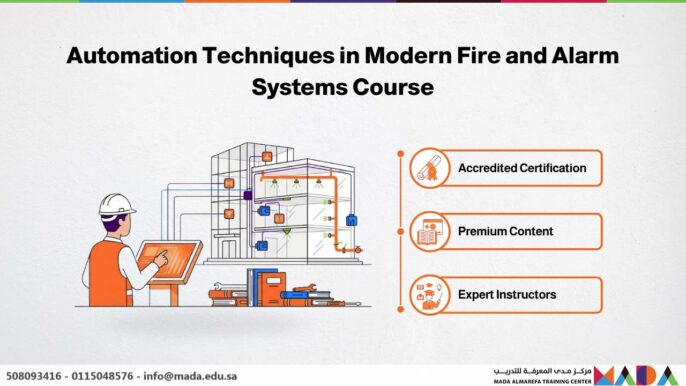
About the Course
The Automation Techniques in Modern Fire and Alarm Systems course is a premier opportunity to master the cutting-edge technologies used in the design and operation of automation-driven early warning systems. This program is designed to equip participants with the theoretical and practical frameworks required to understand how smart systems integrate to protect modern facilities.
As the demand for Smart Building Technology and occupational safety grows, mastering fire automation has become a high-priority competency for security firms, safety consultancies, and engineering supply companies. This course ensures you stay ahead in a rapidly evolving job market.
Course Objectives
- Understand core automation concepts and their specific applications in fire alarm systems.
- Identify the components of modern automated fire and alarm hardware.
- Analyze real-time data from smart sensors using advanced automation techniques.
- Master the integration between fire systems and Building Management Systems (BMS).
- Study international best practices for designing intelligent fire safety infrastructures.
- Evaluate existing legacy systems and propose optimization strategies through automated solutions.
- Keep pace with global technological shifts in life safety and fire protection.
Course Curriculum
Day 1: Introduction to Automation and Smart Fire Systems
- Foundational concepts of automation in modern fire and alarm systems.
- A comparative analysis: Traditional vs. Smart Automated systems.
- The impact of automation on reducing response times and improving reliability.
- Overview of real-world applications in large-scale infrastructure projects.
Day 2: Components of Automated Fire Alarm Systems
- Smart sensors and their role in precision early detection.
- Centralized Control Units (CCUs) in automated environments.
- Automated audio-visual notification and evacuation systems.
- Networking concepts: Connecting system components for seamless communication.
Day 3: Communication Protocols and System Integration
- Industry-standard communication protocols: FireNet, Modbus, and BACnet.
- Methodologies for integrating fire systems with Building Management Systems (BMS).
- The role of the Internet of Things (IoT) in remote fire monitoring and diagnostics.
- Introduction to Cybersecurity for connected and smart fire systems.
Day 4: Designing and Analyzing Intelligent Fire Systems
- Workflow steps for designing an automation-based smart thermal alarm system.
- Data analytics: Transforming sensor data into proactive safety measures.
- Selection criteria for automation-compatible fire protection hardware.
- Case studies: Analysis of successfully implemented automated fire systems.
Day 5: The Future of Fire Safety Automation
- Global trends: The shift toward fully autonomous fire protection.
- The role of Artificial Intelligence (AI) and Big Data in fire prevention.
- Addressing implementation challenges within regional markets.
- Career Roadmap: Essential skills for the future fire safety and automation job market.

