
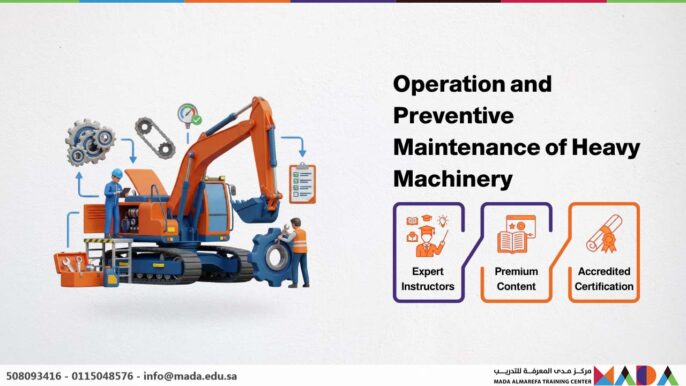
The Operation and Preventive Maintenance of Heavy Machinery course is an advanced theoretical training program designed to establish a comprehensive understanding of the technical and operational frameworks governing heavy equipment. This includes essential machinery such as excavators, loaders, crushers, and bulldozers. The course highlights the critical role of preventive maintenance (PM) in sustaining performance efficiency and maximizing the operational lifespan of these assets.
The program is purely theoretical, focusing on safe operation principles, equipment performance analysis, and the development of maintenance strategies without the need for field exercises. This makes it an ideal fit for mechanical engineers, technicians, maintenance supervisors, team leaders, and administrators in construction, mining, oil and gas, and infrastructure sectors. It covers equipment life cycles, operational risk analysis, and the specifics of periodic inspections—ranging from fluid changes to hydraulic system checks.
General Objective
The primary goal of this program is to empower participants with a deep theoretical understanding of how to operate heavy machinery efficiently. It emphasizes the power of preventive maintenance in reducing downtime, lowering repair costs, and ensuring operational safety. The course builds the capacity to analyze maintenance requirements, evaluate the effectiveness of current plans, and foster a proactive maintenance culture within an organization. No field experience is required; the concepts are presented analytically to support informed technical decision-making.
Detailed Objectives
- Understand the fundamental concepts of safe heavy machinery operation.
- Identify various types of heavy equipment and their core functions.
- Recognize the importance of preventive maintenance in preserving performance.
- Learn how to define periodic maintenance components for different machinery types.
- Understand the role of documentation and maintenance logs in performance optimization.
Course Curriculum
Day 1: Introduction to Heavy Machinery and Operating Environments
- Defining heavy machinery and its primary categories (excavators, loaders, bulldozers, dump trucks).
- Key sectors of application: Construction, mining, and infrastructure.
- Common operational risks: Rollovers, collisions, and fire hazards.
- The significance of theoretical qualification before hands-on operation.
Day 2: Principles of Safe Operation and Efficiency
This session focuses on the mechanical heart of the machine and how to keep it beating steadily.
- System components: Engine, hydraulic systems, transmission, and steering.
- Concepts of efficient operation: Minimizing overload and avoiding sudden stops.
- Environmental impacts: How dust, humidity, and heat affect machine health.
- Monitoring performance indicators: Temperature, pressure, and fuel consumption.
Day 3: The Concept of Preventive Maintenance (PM)
Understanding the shift from “fixing what breaks” to “preventing the break.”
- Distinguishing between Preventive and Corrective (Breakdown) maintenance.
- The benefits of PM: Reducing failures and extending equipment life.
- Maintenance schedules: Daily, weekly, monthly, and quarterly intervals.
- The role of the Checklist in ensuring consistency and safety.
Day 4: Core Maintenance Components
- Inspecting and changing fluids: Engine oil, hydraulic fluid, and transmission fluid.
- Filter maintenance: Air, fuel, and oil filters.
- Inspecting wear-and-tear parts: Belts, bearings, tires, or tracks.
- Checking the electrical system, lighting, and wiring integrity.
Day 5: Documentation, Analysis, and Continuous Improvement
- The importance of logging maintenance activities and documenting faults.
- Analyzing the root causes of recurring failures to implement preventive actions.
- Using maintenance data to optimize schedules and resource allocation.
- Management’s role in supporting a culture of compliance and safety.
Conclusion and Professional Impact
The Operation and Preventive Maintenance of Heavy Machinery course is a vital element for building a workforce capable of managing high-value assets safely and efficiently. In industrial environments where risks and costs are high, understanding these principles is non-negotiable. This course provides the advanced theoretical knowledge needed for proactive asset management, protecting both the investment in the machinery and the lives of those who operate it. By adopting a reliability-centered mindset, professionals can ensure their organizations achieve high operational excellence and long-term sustainability.

